No. 2 Construction Battalion
Canada's first and only all-Black battalion · 1916–1920
The military history of Canada cannot be told without the Black Canadians who served throughout it, as labourers, medical staff, soldiers, sailors and airmen. Among them, none deserve to be remembered more than the men of the No. 2 Construction Battalion: the largest Black unit in Canadian history, and the only predominantly Black battalion ever raised in this country.
A Fight for the Right to Serve
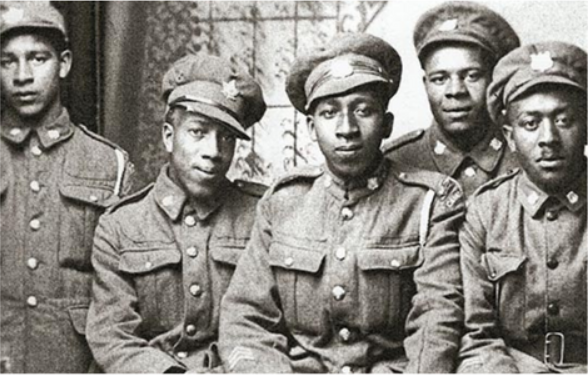
When Canada entered the First World War in 1914, tens of thousands of men rushed to enlist, including hundreds of Black Canadians eager to serve. Most were turned away. Recruiting officers, free to accept or reject volunteers as they saw fit, often told Black men that this was “a white man’s war.” By the end of 1915, at least 200 Black volunteers had been refused.
Black communities and their allies refused to accept this. They petitioned their members of Parliament, the Governor General, and the Minister of Militia and Defence. As Britain’s need for labour grew, that pressure finally produced a result, though a segregated one. On 5 July 1916, the Department of Militia and Defence authorized the formation of the No. 2 Construction Battalion: a single, all-Black unit.
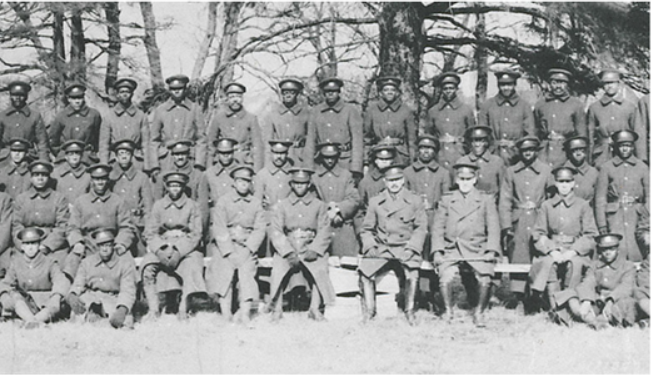
The battalion was formed in Pictou, Nova Scotia, and moved its headquarters to Truro that September. Under the command of Lieutenant-Colonel Daniel H. Sutherland, it drew volunteers from across Canada, the United States and the British West Indies. Its authorized strength was 1,049 men, but recruiting never came close: when it finally sailed for war, it numbered 19 officers and roughly 595 men. Every officer was white but one: the chaplain, Honorary Captain Reverend William Andrew White, one of the only Black commissioned officers in the British forces during the entire war.
Overseas: "They gave us shovels, not rifles"
On 28 March 1917, the battalion sailed from Halifax aboard the SS Southland, reaching Liverpool, England, on 7 April. Far too under strength to serve as a full battalion, it was reorganized as a labour company of about 500 men, the No. 2 Canadian Construction Company.
That May, the unit crossed to France and made its way to Lajoux, high in the Jura Mountains near the Swiss border, where it was attached to No. 5 District of the Canadian Forestry Corps. There the men felled, milled and shipped lumber, one of the most critical materials of the war, used to line trenches and build duckboards, gun platforms, railway ties and ammunition boxes. Even far from home, doing essential work, the men of No. 2 faced the same prejudice: they were often supplied last, and at times white medical officers refused to treat them. Still, they persevered.
Forgotten, Then Honoured
After the Armistice, the men returned home to no parade and little thanks. The unit was quietly disbanded on 15 September 1920, and its story slipped from public memory for decades. It was rescued largely through the work of the late Senator Calvin Ruck, whose research in the 1980s, and his book The Black Battalion, 1916–1920: Canada’s Best Kept Military Secret, brought the unit back into the national story.
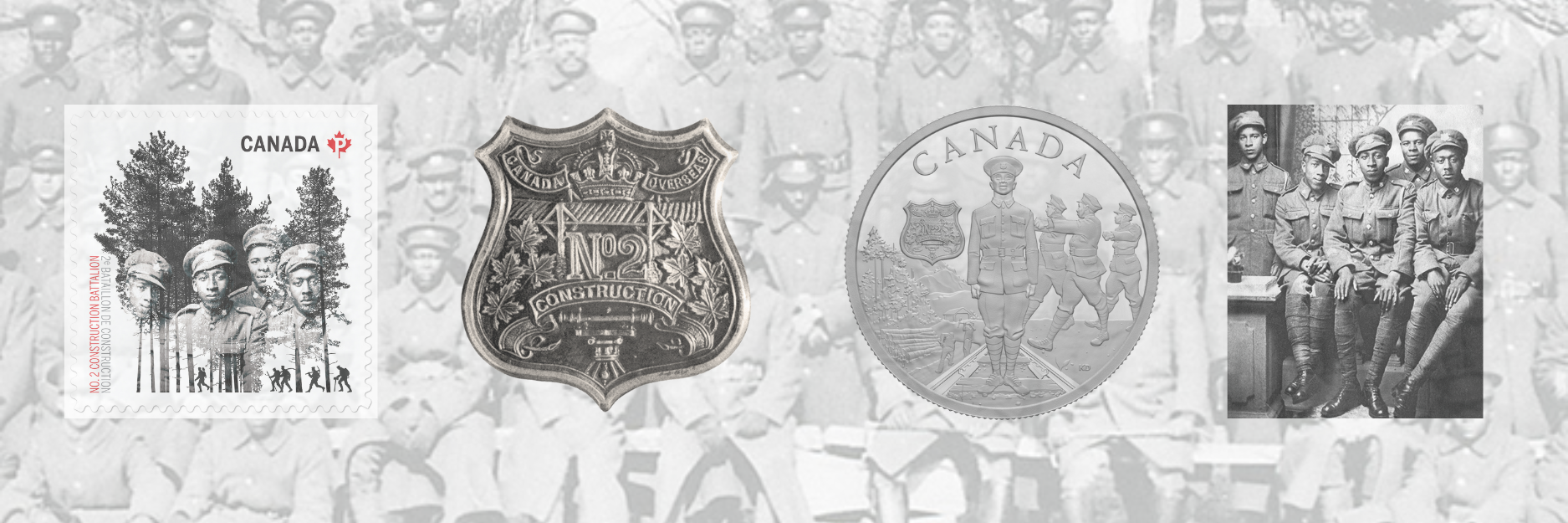
Recognition slowly followed. The Government of Canada designated the battalion a national historic event in 1992; a monument was raised in Pictou in 1993; and Canada Post issued a commemorative stamp in 2016. On 1 June 2022, here in Ottawa, the Canadian Armed Forces awarded the battalion the “France and Flanders, 1917–18” Battle Honour.
A National Apology
On 9 July 2022, in Truro, Nova Scotia, the Government of Canada delivered an official national apology to the descendants of the No. 2 Construction Battalion. Prime Minister Justin Trudeau said:
“When they returned home, the members of the No. 2 Construction Battalion never received the heroic welcome they deserved… We apologize for the blatant racism of refusing Black volunteers when they offered to sacrifice their lives for all. We apologize for not allowing Black members of the service to fight alongside their compatriots. We apologize for denying them the care and support they deserved… We apologize for the anti-Black hatred and systemic racism that denied these men dignity in life and death.”
To mark Black History Month in 2023, the Royal Canadian Mint issued a commemorative coin honouring the battalion. Today, 4 Engineer Support Regiment carries on its lineage as the perpetuating unit, ensuring the men of No. 2 are never forgotten again.